
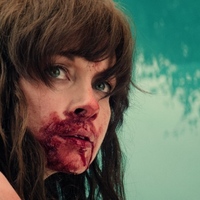
Sink your teeth into the meaty teaser poster for Andrea Corsini’s fable, Ferine.

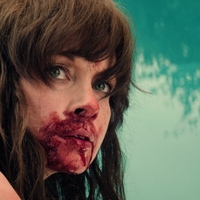
Sink your teeth into the meaty teaser poster for Andrea Corsini’s fable, Ferine.
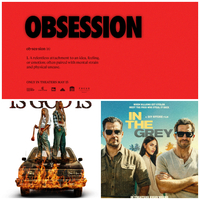
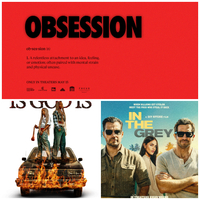
Plus: ‘Decorado,’ ‘LifeHack,’ ‘Mobile Suit Gundam Hathaway: The Sorcery of Nymph Circe,’ ‘Been Here Stay Here,’ ‘The Wizard of the Kremlin,’ ‘Magic Hour.’
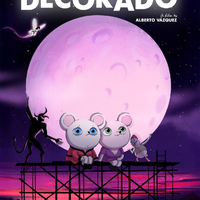
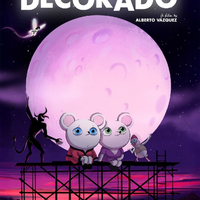
Alberto Vázquez expands his short film into a transcendent dark comedy for adults.
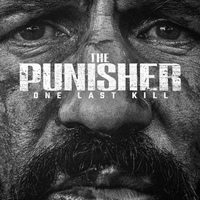
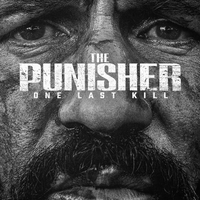
Jon Bernthal’s Punisher returns, yelling, weeping and shooting his way through a repetitive revival.
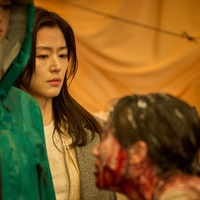
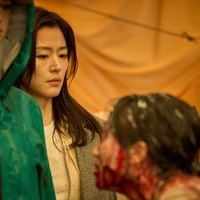
We respect the Cannes Film Festival, which kicked off earlier this week with Pierre Salvadori’s The Electric Kiss. As good (or bad) as that film may be, we must point out that it doesn’t have any zombies. Score one for the New York Asian Film Festival, then, which has announced, via Deadline, that Yeon Sang-ho’s new zombie thriller Colony will open its 25th edition. Our own Andrew Mack reported earlier this week that Colony has been acquired by Well Go USA for distribution in North America. Many other territories have also been acquired. To give Cannes its due, Colony will enjoy its world premiere there today as part of its Midnight Screenings section. Well Go USA is already planning a theatrical release for the film…


After surviving a private jet crash in the middle of the Pacific, a struggling actress finds herself stranded on a shattered wing inside the deadly waters of the White Shark Café, where her only hope for rescue comes through a marine biologist warning her that great whites are already circling.


I am here for the vertical and the horizontal. I am here for the grain, and the juxtaposition of skin tones and jade. I am here for the simple connection of two human beings in shared repose. Sometimes, key art need not be any more complicated than good colour matching and beautiful humans. Set in the shadowy underworld of 1990s Saigon, Ash Mayfair’s Skin Of Youth crafts a striking portrait of queer life and personal freedom, blending emotional intensity with sensuous imagery. This is self-evident from the simple power of its key art. While there is an English language version of the original poster, below, that one lacks the criss-cross of vertical and horizontal text, a detail which better accents the vertical window in the background and…


A blind acupuncturist is pulled back into the city’s brutal criminal underworld when a ruthless gang boss targets a young patient under his protection, forcing him to weaponize his deadly knowledge of the human body to save the boy before it’s too late.
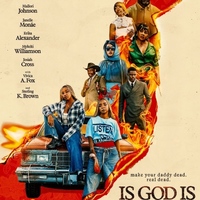
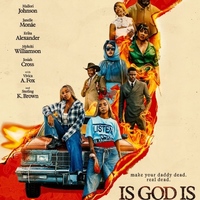
It’s difficult, if not impossible, to imagine a bolder, more fearless feature-length debut this year than playwright-turned-filmmaker Aleshea Harris’ uncategorizable feature-length debut, Is God Is. Part righteous rampage of revenge (down, as always, with the patriarchy in all its forms), part road movie, part grindhouse allegory, Is God Is qualifies as a singular achievement in filmmaking. It’s one of one, and so, apparently, is Harris herself. Sometimes — and this is one of those times — hyperbolic superlatives are fully merited. After receiving her BA from the University of Southern Mississippi and her MFA from the California Institute of the Arts, Harris focused her artistic talents on playwrighting. Is God Is premiered at NYC’s famed Soho Repertory Theatre in February 2018, winning three…
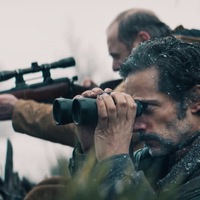
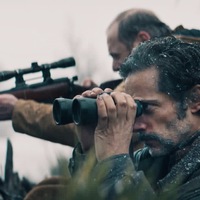
In the depths of Patagonia during the 80’s, a hunting guide stumbles upon a shocking crime involving his niece, forcing him to investigate and to confront the haunting secrets of that era’s dark years in his pursue of justice.