
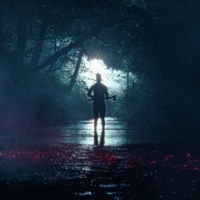
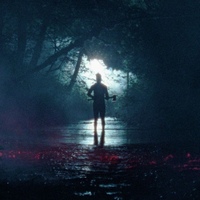
Every film festival program, no matter how expansive and diverse, usually has a bunch of movies that objectively aren’t bad, but aren’t particularly great either. When thinking about such films and what might be weighing them down, the conclusion you come to most of the time is that, while often adequately executed, they are simply not original enough to evoke any true feeling. From scene to scene, or sometimes, from frame to frame, you more or less know what to expect next, which traditionally makes it harder to be really excited about anything that happens on screen. Adam Egypt Mortimer’s Pathetic Fallacy, which premiered at Fantastic Fest and was recently shown at the Brooklyn Horror Film Festival at one of their secret screenings, doesn’t have…
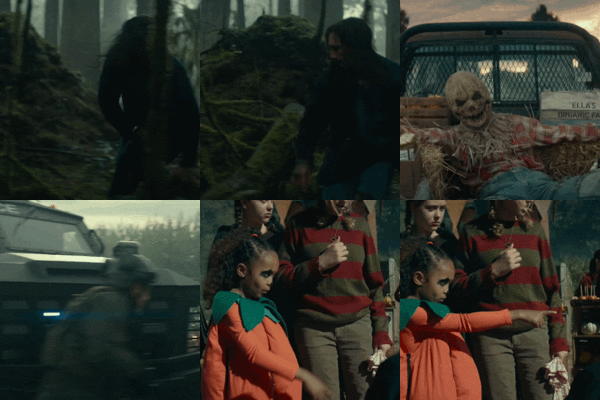
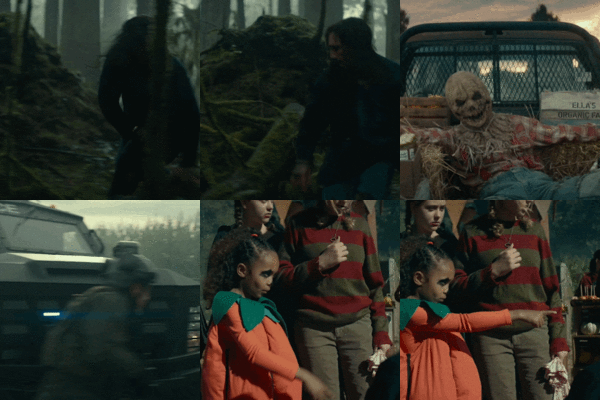
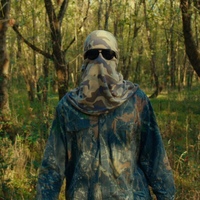
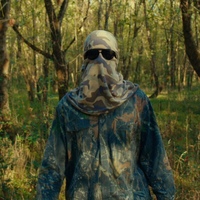
Scare-actor “Metal Mike” Graves wakes up in a haunted attraction surrounded by the dead bodies of his co-workers with no memory of how they got there. As a state-wide manhunt closes in, he races to uncover the truth – even if the trail leads straight back to him.
While not in every culture in human history has elevated male children to the point of all but killing (or even that) their female children, too many have long-held beliefs that boys bring luck and prosperity, whereas girls (despite doing at least half if not more of the work to maintain a society) are a burden. But gender is a social construct, we can’t control the weather, and if you decide girls are as important as boys, you might find your society better for it. But this was not the way in some regions of the Balkans, even as recently as the late 19th century, and a disturbing custom is the focus of Virgina, written and directed by Serbian filmmaker Srđan Karanović (Something in Between, A Film Without…
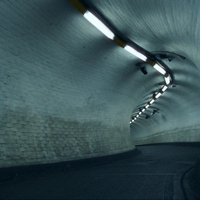
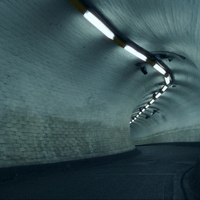
A patient shot of a damp London metro platform opens Anastasia Mischenko’s superlative short film Moira. It’s a shot that instantly evokes the static-adroit Euro-cinema of early 2000s Bruno Dumont, and the more recent work of Milagros Mumenthaler (The Currents). A woman leaves the platform and returns home to discover her partner in the middle of vocal sex. She stands in the threshold of the doorway, not entirely in the house, while the camera holds on her face as she processes the sounds coming from the bedroom upstairs. She leaves and makes her way across London on transit, through bleak, partially-desaturated autumn fields, bricked alleyways, and at one point through the Greenwich foot-tunnel (under the Thames) in all its curved walls and fluorescent lit glory. The…
Twentysomething Alice is a dreamer. She wants true love, intense love, and reciprocated love. She is not finding it in the clubs with her girlfriend, though, and her current boyfriend is clearly not into her. You can hear it in his voice on the phone before he brutally dumps her in person. But she is young, and attractive, and willing to do anything, including a pact with the Devil, a glowing-eyed man who prefers the booth in the back of the local dive bar, to make this happen with the next fellow who comes along. That would the be tall, dark and slightly dim Luke, a goth-adjacent photographer with a slow manner of speaking and a voice that is a dead ringer for Ryan Gosling….
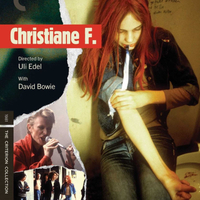
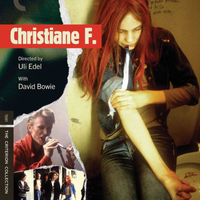
“We could be heroes,” sings David Bowie, if only these kids could get off the heroin just for one day.
Plus: ‘A Talent for Murder,’ ‘Klara and the Sun,’ ‘Possible Love,’ ‘Gentle Monster,’ ‘The Mosquito Bowl.’
Throughout A City in the Forest, which tracks various forms of opposition to Atlanta’s “Cop City” from 2020 to 2023, the filmmakers shout that they are press to ensure that they are not attacked by police who are violently arresting and assaulting protesters. In two scenes, people being arrested cry out to the filmmakers for help, but they do not engage; remaining as close as they can to capture the cops’ violence while doing their best to avoid it themselves. The inclusion of these moments forces us to consider the many forms combatting state violence (against people and the environment) can take, and either question or affirm the importance of documentation as a form of protest in itself. The choice to include what some on…
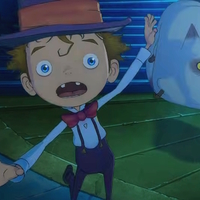
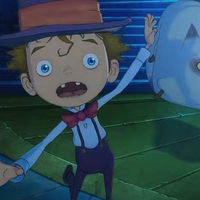
Six years ago, CGI-special effects specialist Hirota Yuusuke directed his first feature film, the anime Poupelle of Chimney Town, which I happened to like a lot. He just released his second feature, and it is… a sequel to Poupelle of Chimney Town. That first film was based on a series of children’s books written by Japanese comedian Nishino Akihiro, and apparently there is plenty more where that came from. Nishino wrote the script for this sequel and helped produce it. The new film is called Chimney Town: Frozen in Time and played at the Camera Japan Festival in Rotterdam and Amsterdam, where I caught up with it. Chimney Town: Frozen in Time takes place some time after the events in Poupelle of Chimney Town. In…
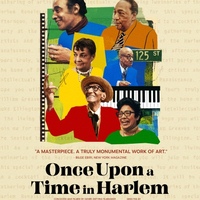
In 1972, director, editor, producer, and actor William Greaves, whose body of work includes Symbiopsychotaxiplasm: Take One (1968) and Nationtime (1972), gathered the remaining luminaries of the Harlem Renaissance in Duke Ellington’s apartment on 157th. This meeting resulted in four hours of footage but didn’t become a movie – until now. Greaves’s son, David Greaves, was one of four cameramen who were involved in the original shoot. Decades after the fact and years after William Greaves’s passing in 2014, David edited the footage of that meeting, compressing it into an hour and forty minutes of the enthralling whirlwind that is Once Upon a Time in Harlem. Based upon a formal description, it might seem to the audience going in blindly into this film, which was…