



Father Figure, Mother Tongue: Dulude-De Celles Curates Reconciliation
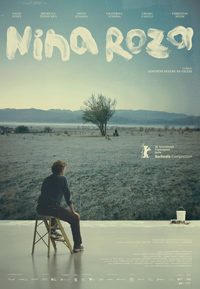 It turns out you can go home again…but don’t expect not to confront psychic wounds left untended, at least according to Nina Roza, the second narrative feature from Canadian filmmaker Geneviève Dulude-De Celles. The title refers to the names of two young girls who are of extreme significance to an art curator who immigrated to Montreal from Sofia, Bulgaria nearly thirty years ago. Professional circumstances allow for a coincidental reconciliation with his native country, but the results couldn’t be more personal. It’s a noiseless film, overtly a character study about one man’s journey towards discovering what actual role he’s playing in the curation of artists as well as examining the agency he may have denied his own child by neglecting her native heritage.… Read the rest


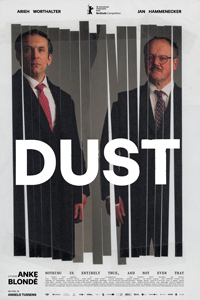 There’s an interesting idea behind Dust, which finds two Belgian entrepreneurs essentially navigating their last two days of freedom in 1999 and struggling to come to terms with embracing accountability for their actions. However, it all seems like something of a one-dimensional fantasy, especially in a climate of seemingly inescapable corporate control gripping the world nearly thirty years later. Perhaps director Anke Blondé is suggesting what a different world it would be had a previous generation of corporate criminals accepted their fate, setting an example for how greed and hubris aren’t really beneficial for a just and fair existence.…


 If there’s a trough line (beyond the eponymous titles) of Austrian director


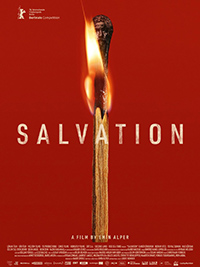 The land dispute at the center of Emin Alper’s latest film Salvation has all the trademarks of a Shakespearean tragedy, so it’s unfortunate his approach often feels labored, and at times, over the top. Historically, Alper has tended to prize provocative, often intense explorations of brooding animosity leading to explosive conflicts, such as earlier title Frenzy (2015) or the Cannes debut Burning Days (2022), featuring a sinister criminal investigation at the center of a town’s local politics, which includes queer elements. Alper’s painstaking screenplay takes its time laying the groundwork for the complex social and political relationships defining a remote Turkish village constantly on the precipice of conflict with their nearest neighbors.…


 Karim Aïnouz doesn’t so much eat the rich as he does regurgitate them in his latest feature, Rosebush Pruning, a hyper stylized rehash of Marco Bellocchio’s breakout classic, Fists in the Pocket (1965). Tonally, this feels much more like a dead end tangent to the Greek Weird Wave thanks to screenwriter Efthimis Filippou, who seems to have approached Bellocchio’s masterwork as a sordid sequel to The Lobster (2015). Aïnouz, whose previous feature Motel Destino (2024) attempted to resuscitate The Postman Always Rings Twice through a vaguely queer lens, lustily follows a similar pattern of lost souls indefinitely confined within the very abode which defines and sustains their existence.…


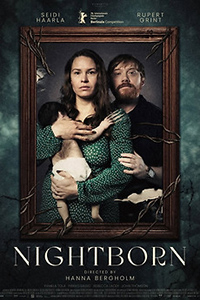 Finnish director Hanna Bergholm adds to the subgenre of motherhood body horror with Nightborn (Yön Lapsi), an arguably more contained palette than her 2022 debut Hatching, which similarly dealt with female body image expectations and dysfunctional kinship roles. Her latest feels more like situational comedy, whereby a woman’s ‘madness’ is triggered by a couple’s move to an isolated, dilapidated family home in the eerie thickness of a fairy style primed Finnish forest. Settling into a familiar groove, it’s a film wherein the idiosyncratic wavelength’s success depends solely on the increasingly untethered lead performance from Seidi Haarla, who certainly throws herself admirably into full tilt weird.…


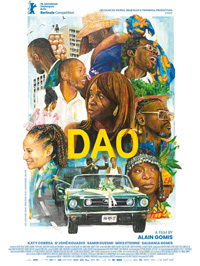 With his first narrative feature in nearly a decade, French-Senegalese director Alain Gomis formulates a complex tapestry with Dao, which is defined as “a perpetual and circular movement which flows in everything and unites.” The key words here are ‘flow’ and ‘unites,’ as Gomis throws everything and the kitchen sink into a freewheeling docudrama which feels akin to navigating a Cristi Puiu ensemble. Impressively assembled with much to admire, there are moments which often suggest the film could be a masterpiece. However, there’s also often a meandering, even lethargic pacing as the narrative flits between two key events in Paris and Guinea-Bissau, and it often feels like a more fastidiously edited cut might assist in honing its three-hour plus running time into something more elegant.…

